















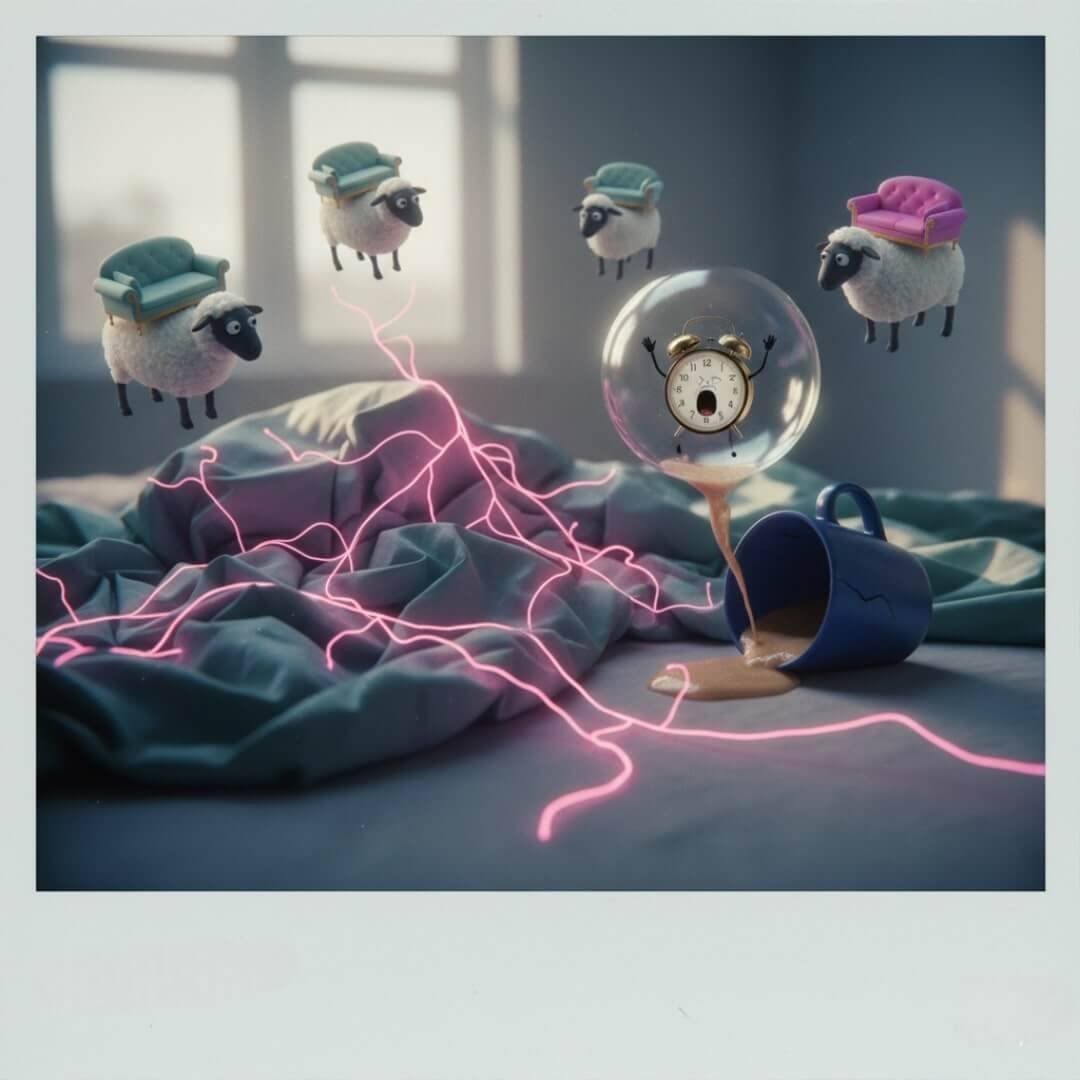
How sleep directly impacts your mental health isn’t some abstract TED Talk bullshit—it’s me at 3:47AM in my Bushwick apartment, heart jackhammering because I swore I heard the upstairs neighbor plotting my demise through the floorboards. Like, I’m a grown-ass 32-year-old who pays taxes and everything, but show me four nights of broken sleep and I’m convinced the bodega cat is an FBI informant. The sensory overload is chef’s kiss brutal: the radiator clanks like it’s auditioning for a horror movie, my mouth tastes like I licked a battery, and every notification ping feels like a personal attack.
Why Poor Sleep Turns My Brain into a Haunted House
Last month I pulled three all-nighters finishing a pitch deck (because capitalism, duh) and by day four I was ugly-crying in the Duane Reade vitamin aisle because the melatonin gummies were sold out. How sleep directly impacts your mental health became extremely clear when I tried to explain to the cashier that the gummies were “literally the only thing standing between me and a nervous breakdown” while clutching a bag of Flamin’ Hot Cheetos like a security blanket.

The science isn’t gentle about this—sleep deprivation literally shrinks your prefrontal cortex’s ability to regulate emotions. I read that on this NIH study at 2AM while eating cold pizza off a paper plate balanced on my chest. My personal translation? Four hours of sleep = my brain running Windows Vista with 12 tabs of existential dread open.
The Insomnia-Anxiety Feedback Loop (My Personal Hell Carousel)
Here’s how it goes down in my skull:
- Night 1: “Just one more episode, I’ll sleep tomorrow.”
- Night 2: Brain starts composing breakup texts to people I haven’t dated in six years.
- Night 3: I’m googling “can lack of sleep cause hallucinations” while definitely hallucinating.
I once spent 45 minutes convinced my ceiling fan was sending me Morse code about my student loans. Turns out that’s called hypnagogic jerk but with a side of untreated anxiety. How sleep directly impacts your mental health isn’t theoretical when you’re bargaining with the universe for “just one good night, please God I’ll venmo you.”
What Actually Helped (Besides Magical Thinking)
Tried the whole “sleep hygiene” thing and failed spectacularly at first. My lavender pillow spray smelled like a Victorian funeral and the white noise machine sounded like a dying robot. But here’s what stuck:
- The 3-2-1 Rule (stolen from a Reddit thread at 4AM):
- 3 hours before bed: no food (sorry, midnight tacos)
- 2 hours before: no work email (lies, but I try)
- 1 hour before: no screens (currently breaking this rule to write this)
- Temperature Hack: Keep bedroom at 67°F. My broke ass achieved this by cracking the window and sleeping in socks like a psychopath. Works though—Harvard says so.
- The “Brain Dump” Journal: Write every swirling thought on paper. Mine includes gems like “did I leave the stove on in 2019?” and “why did I tell my boss about my dream where he was a potato?”

The REM Rebound That Saved My Sanity
After crashing for 11 hours straight (woke up at 3PM covered in drool and Cheeto dust), I had the most vivid dreams of my life. Turns out your brain needs REM to process emotional baggage—mine apparently stored an entire season of unresolved trauma in a folder labeled “miscellaneous.” Woke up crying but… lighter? Like my subconscious finally hit “empty trash.”

Wait, But Sometimes I Secretly Love the Chaos?
Here’s the contradictory part: those 3AM spirals birthed my best creative work. The pitch deck that made me cry in Duane Reade? Landed the client. The journal rants about ceiling fan conspiracies? Turned into a viral Twitter thread. How sleep directly impacts your mental health is complicated—sometimes the broken version of me writes better than the rested one.
But the crash always comes. The client win feels hollow when you’re dissociating in the shower, trying to remember if you used shampoo or body wash on your face.
My Current Compromise (Because Perfection is a Scam)
- Micro-naps: 20 minutes on the fire escape with a hoodie over my face. The pigeons judge me but whatever.
- “Good Enough” Sleep Goal: 6.5 hours minimum. Anything more feels like cheating on my insomnia.
- Therapy + ZzzQuil: Not together. Learned that the hard way.
Wrapping This Ramble Up (Before I Crash Again)
Look, how sleep directly impacts your mental health isn’t a straight line—it’s more like those string art projects from third grade that somehow make a butterfly but mostly look like chaos. My Brooklyn apartment still smells faintly of burnt toast and desperation, but I’m trying. If you’re reading this at 2AM with one eye open, close the tabs. Drink some water. Text your ex “new phone who dis” tomorrow instead.
Your turn: What’s the dumbest thing you’ve done on zero sleep? Drop it in the comments—I need to know I’m not alone in this beautifully broken club.
Outbound Link: American Academy of Sleep Medicine’s Find a Sleep Center tool