Preventive Care
Bone density after menopause: what a DEXA score actually means
A T-score of −2.4 sounds alarming and a fracture risk of 8 per cent sounds reassuring, and they can describe the same person. Here is how to read the numbers you are given.
Bone is not inert scaffolding. It is remodelled continuously — old bone resorbed by osteoclasts, new bone laid down by osteoblasts — and for most of adult life the two processes are roughly in balance. Oestrogen restrains resorption, so when it falls at menopause, resorption outpaces formation. Bone loss in the first five to ten years after menopause runs at around 2 per cent a year, which is considerably faster than the age-related loss that continues afterwards.
Men lose bone too, more slowly and later, and roughly a third of osteoporotic fractures occur in men. They are diagnosed less often, treated less often, and do worse after a hip fracture — a discrepancy that has been documented repeatedly and not much acted upon.
Reading the T-score
A DEXA scan reports bone mineral density at the hip and lumbar spine, expressed as a T-score: the number of standard deviations you sit above or below the mean for a healthy young adult of your sex.
- Above −1.0 — normal.
- −1.0 to −2.5 — osteopenia, meaning low bone mass. Not a disease.
- −2.5 or below — osteoporosis.
Those cut-offs were defined by a WHO working group in 1994 largely for epidemiological purposes, and they are administrative lines drawn across a continuous distribution. There is nothing categorically different about −2.4 and −2.6. Fracture risk rises smoothly as density falls, roughly doubling for each standard deviation.
The Z-score, also reported, compares you to others of your own age and sex. It is the more relevant number in younger patients and in men, where an unexpectedly low Z-score should prompt a search for a secondary cause — coeliac disease, hyperparathyroidism, myeloma, long-term steroids, excess alcohol, hypogonadism.
Why density alone is a poor guide to treatment
Here is the fact that reframes the whole subject: most fragility fractures occur in people who do not meet the density criterion for osteoporosis. Because osteopenia is far more common than osteoporosis, the larger absolute number of fractures arises from the larger, lower-risk group.
Density is also only part of bone strength. Microarchitecture, cortical thickness, turnover rate and — crucially — the tendency to fall all contribute, and a DEXA measures none of them.
This is why treatment decisions have moved toward absolute fracture risk rather than T-score alone. FRAX, developed at Sheffield, combines age, sex, weight, height, previous fracture, parental hip fracture, smoking, glucocorticoid use, rheumatoid arthritis, secondary osteoporosis and alcohol intake — with or without a femoral neck density value — to estimate ten-year probability of major osteoporotic fracture and of hip fracture.
Ask for your ten-year fracture probability, not just your T-score. Thresholds vary by country, but treatment is commonly recommended above roughly 20 per cent for major osteoporotic fracture or 3 per cent for hip fracture. A prior fragility fracture after 50 usually justifies treatment on its own, whatever the density shows.
The treatments, briefly and honestly
Bisphosphonates (alendronate, risedronate, zoledronic acid) reduce vertebral fractures by roughly half and hip fractures by around 20 to 40 per cent in the treated populations studied. They are cheap and well established. They must be taken exactly as directed — upright, with water, on an empty stomach — because oesophageal irritation is the common problem.
Two rare adverse effects receive attention out of proportion to their frequency: osteonecrosis of the jaw and atypical femoral fracture. Both are genuinely rare in the osteoporosis setting — atypical femoral fractures on the order of one per 10,000 patient-years in the early years of treatment — and both become more likely with longer duration. This is the rationale for a drug holiday after three to five years in lower-risk patients, with reassessment.
Denosumab is effective and has an important property patients are not always told about: stopping it causes rapid rebound bone loss and a risk of multiple vertebral fractures. It should not be started without a plan for what follows it.
Anabolic agents — teriparatide, abaloparatide, romosozumab — build bone rather than merely preserving it, and are reserved for high-risk patients, usually followed by an antiresorptive to hold the gains.
Hormone therapy prevents bone loss effectively and is a reasonable option in women near menopause with other indications for it, though it is not usually started solely for bones.
The part that is not pharmacological
Adequate calcium and vitamin D are supportive rather than sufficient; they do not prevent fractures on their own in replete populations, and the trials showing otherwise were largely in institutionalised, deficient older adults.
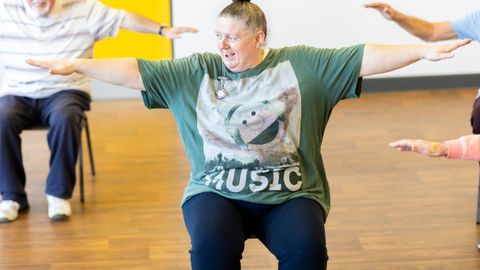
Weight-bearing and resistance exercise has a modest effect on density and a considerably larger effect on the thing that actually breaks bones, which is falling. High-impact loading is more osteogenic than low-impact, but is not appropriate for everyone; progressive resistance training is the more universally applicable answer, and it improves balance and muscle at the same time.
Stopping smoking helps. So does keeping alcohol below about two units a day. And reviewing the medication list for drugs that cause falls or sedation is, again, one of the highest-yield things available — as with so much else in this field, the fracture is usually prevented on the way down rather than in the bone.
Also by Dr. Helen Marsh
- What actually protects memory: separating the evidence from the marketingBrain & Memory
- Blood pressure targets at 70 are not the same as at 45Heart & Metabolic
- Deprescribing: the medication review almost nobody is offeredPreventive Care
- Loneliness is a health risk. What the research actually showsLiving Well