Living Well
Cooking for one after a lifetime of cooking for four
Appetite falls with age for reasons that are physiological as much as emotional. The combination of eating alone and cooking for one is one of the more reliable routes into undernutrition.
Undernutrition in older adults living at home is more common than most people assume — European and North American surveys typically find 5 to 10 per cent malnourished and a further quarter at risk, with rates several times higher after hospital discharge or bereavement.
It rarely looks like starvation. It looks like a person who has lost four kilograms over a year without trying, whose clothes hang differently, who is getting infections more often and taking longer to recover from them. Very often nobody has weighed them.
The anorexia of ageing is a physiological thing
It is worth knowing that reduced appetite in later life is not simply low mood or laziness. Several mechanisms contribute.
Gastric emptying slows, so satiety arrives sooner and lasts longer. The hormonal regulation of appetite shifts — cholecystokinin, which signals fullness, rises; ghrelin, which signals hunger, falls. Taste and smell both decline substantially, with smell in particular deteriorating from around sixty, which strips food of most of what makes it interesting. Medications add dry mouth, nausea and altered taste. Dental problems make chewing tiring.
The result is that an older person eating until they feel satisfied may be eating meaningfully less than they need, and will not experience this as hunger.
Why eating alone matters
The social facilitation of eating is one of the more robust findings in food research: people eat substantially more in company than alone, and the effect scales with the number of people at the table. When a household of two becomes a household of one, intake falls for reasons that have nothing to do with cooking ability or money.
Then there is the loss of role. For someone who cooked for a family for fifty years, the meal was an act of care with a recipient. Cooking for yourself alone is a chore for one; a great many people simply stop, and slide toward toast, biscuits, tea and cereal — all of which are energy without much protein, and protein is the thing older adults can least afford to lose.
Unintentional weight loss of 5 per cent or more in six months, or 10 per cent over a year, is clinically significant and warrants a GP appointment regardless of starting weight. Weigh monthly, same scales, same time of day. A person can lose a great deal of muscle before anyone remarks on how they look.
Making one portion worth cooking
The practical problem is that recipes are written for four, ingredients are sold for four, and cooking a proper meal for one feels disproportionate. Several strategies genuinely help.
Cook for four and freeze three. The effort is nearly identical and it converts a daily decision into a weekly one. Portion into single containers before freezing, label them, and keep a written list on the freezer door — the commonest failure is a full freezer nobody can identify the contents of.
Build around a component rather than a recipe. Roast a tray of vegetables, cook a batch of grains, poach several chicken breasts or bake a piece of fish. Then assemble differently each day. This avoids the fatigue of eating the same complete meal four nights running, which is what puts people off batch cooking.
Keep a stocked shortcut shelf. Tinned sardines and mackerel, tinned beans and lentils, frozen peas, eggs, UHT milk, oats, nut butter, frozen berries, tinned tomatoes. On a bad day, sardines on toast is a genuinely decent meal — protein, omega-3, calcium from the bones — and takes four minutes.
Do not fear the freezer aisle. Frozen vegetables are nutritionally equivalent to fresh and often better than fresh that has sat for a week. Ready meals vary enormously; the useful habit is to check for at least 20 g of protein and to add something to them — a tin of beans, a handful of frozen peas, grated cheese.
Making the calories count
When appetite is small, the priority inverts. The usual advice to fill up on low-energy foods is exactly wrong; the aim is to make every mouthful carry as much protein and energy as possible.
Fortify rather than increase volume. Milk powder stirred into porridge, soup or mashed potato adds protein without adding bulk. Grated cheese, cream, butter, olive oil, nut butters and ground nuts all raise energy density. Full-fat dairy rather than skimmed, which is a reversal of the advice most people spent their fifties following and is correct for this situation.
Eat by the clock rather than by appetite if appetite has gone — three small meals and two or three snacks, at set times, is more reliable than waiting to feel hungry.
And prioritise protein at breakfast, which is where the deficit usually lives. Eggs, Greek yoghurt, beans, or milk on porridge rather than water.
The social half of the problem
No amount of meal planning fixes the fact that eating alone three times a day is bleak. The interventions that help are social rather than culinary.
Lunch clubs, community meals and shared tables exist in most places and are consistently under-used by exactly the people who would benefit. A standing arrangement to eat with someone once or twice a week — a neighbour, a friend, an adult child — reliably raises intake on those days and, in several studies, on adjacent days too.
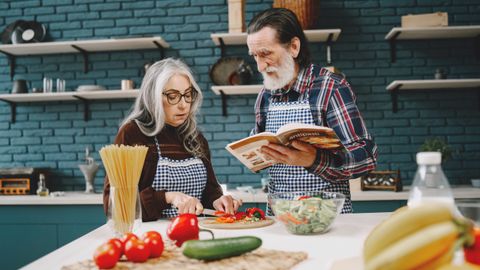
Cooking with someone else, or for someone else, restores the part that was lost. If a person will not cook for themselves but will cook for a grandchild who comes on Thursdays, then Thursdays are worth arranging.
When to involve a professional
Persistent weight loss, poor appetite that lasts more than a few weeks, difficulty swallowing, or recurrent chest infections after eating all warrant medical assessment. Swallowing problems in particular are under-reported and carry a real risk of aspiration pneumonia.
Dietitians can prescribe fortified supplements where food alone is not enough, and they are considerably better used early than as a last resort. A referral is worth asking for.
Also by Ingrid Solberg
- How much protein do you actually need after 50?Nutrition After 50
- Vitamin D, B12 and calcium: which supplements have earned their place after 60Nutrition After 50
- Fibre, the ageing gut, and why constipation is not inevitableNutrition After 50
- Thirst is an unreliable signal after 65. What adequate hydration actually looks likeNutrition After 50