Brain & Memory
Sleep apnoea in older adults: commoner than diagnosed, and often missed entirely
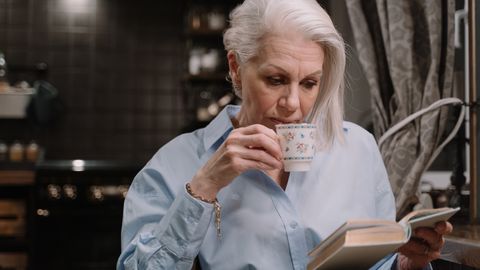
The classic patient is imagined as an overweight middle-aged man who snores. A substantial share of undiagnosed cases are thin older women whose only complaint is fatigue and poor concentration.
Obstructive sleep apnoea involves repeated collapse of the upper airway during sleep, producing intermittent hypoxia, fragmented sleep and surges in sympathetic activity. Prevalence rises with age, and studies using full polysomnography in older populations find rates far higher than clinical diagnosis rates suggest.
Part of the gap is that the standard clinical picture describes a middle-aged presentation. Older patients are less likely to report loud snoring or dramatic daytime sleepiness, and more likely to present with nocturia, morning headache, poor concentration, low mood, or simply fatigue that has been attributed to age.
Older women are particularly under-diagnosed. Prevalence rises after menopause, presentations are frequently atypical, and referral rates are lower.
Why it matters
The associations are substantial. Untreated moderate to severe OSA is linked to hypertension — particularly resistant hypertension — atrial fibrillation, stroke, type 2 diabetes and heart failure.
The cognitive associations are of particular interest here. Intermittent hypoxia and sleep fragmentation both plausibly affect cognition, and observational studies have found associations between OSA and both cognitive impairment and dementia risk. Whether treatment alters that trajectory is not established, and it would be overstating the evidence to promise it.
There is also a more immediate concern: sleep apnoea causes daytime sleepiness and increases motor vehicle accident risk, which matters for anyone still driving.
Do you snore loudly? Has anyone seen you stop breathing in your sleep? Do you wake unrefreshed after adequate hours? Do you have a morning headache? Do you get up more than twice a night to pass urine? Do you doze off unintentionally during the day — reading, watching television, in a car? A positive answer to several of these, particularly witnessed pauses, warrants a sleep study.
Getting diagnosed
Home sleep apnoea testing has made assessment considerably more accessible — a portable device recording airflow, oxygen saturation, effort and heart rate over one or more nights at home. It works well for uncomplicated moderate-to-severe disease.
Full in-laboratory polysomnography remains necessary where the picture is unclear, where central sleep apnoea is suspected, where there is significant heart failure or neuromuscular disease, or where another sleep disorder such as REM sleep behaviour disorder is in question.
The apnoea–hypopnoea index counts events per hour: 5–15 is mild, 15–30 moderate, above 30 severe. The index alone is a crude measure — the degree of oxygen desaturation, sleep fragmentation and symptom burden all matter for deciding whether to treat.
Treatment
CPAP remains the most effective treatment. It reliably abolishes events, improves sleepiness, and improves quality of life. Its effect on hard cardiovascular outcomes has been less clear than expected — the SAVE trial found no significant reduction in cardiovascular events, though adherence in that trial averaged around three hours a night, which is likely insufficient. The honest position is that CPAP clearly improves symptoms and its effect on cardiovascular endpoints in unselected patients is unproven.
Adherence is the central problem, and it is where most of the practical work sits. Mask fit matters more than anything else, and trying several types is normal rather than a sign of failure. Humidification helps with dryness. Pressure ramping helps with initial discomfort. In older adults, arthritis and dexterity can make handling the equipment difficult, and nasal obstruction should be treated.
Mandibular advancement devices are a reasonable alternative in mild to moderate disease, or for those who cannot tolerate CPAP. They require adequate dentition, which in older adults is not a given.
Positional therapy helps where events occur predominantly supine, which is a meaningful subgroup.
Weight loss reduces severity where there is excess weight, though a proportion of older patients with OSA are not overweight — airway collapsibility increases with age independently of body habitus.
Avoiding alcohol and sedatives in the evening, both of which relax the airway and worsen events. This is one of the higher-yield changes and is often missed.
Central sleep apnoea, which is different
In central sleep apnoea the airway is open but respiratory effort ceases — a problem of respiratory control rather than obstruction. It is more common in heart failure, where Cheyne–Stokes respiration is a recognised pattern, and in people on long-term opioids.
Treatment differs, and adaptive servo-ventilation — once used for this — was found to increase mortality in patients with heart failure and reduced ejection fraction in the SERVE-HF trial, which was a significant and unwelcome result. Central apnoea needs specialist management rather than a standard CPAP prescription.
Worth pursuing
If someone has been told for years that they are just tired, that they snore a bit, or that their concentration is going — and nobody has asked about their breathing at night — a sleep study is a reasonable request. It is one of the more satisfying diagnoses to make, because the treatment works quickly and the person often had no idea how badly they had been sleeping.
Also by Dr. Helen Marsh
- What actually protects memory: separating the evidence from the marketingBrain & Memory
- Blood pressure targets at 70 are not the same as at 45Heart & Metabolic
- Deprescribing: the medication review almost nobody is offeredPreventive Care
- Loneliness is a health risk. What the research actually showsLiving Well