Heart & Metabolic
Aerobic fitness after 60: what VO2 max means and why it keeps falling
Cardiorespiratory fitness declines about 10 per cent a decade, and accelerates after 70. It is also among the strongest predictors of mortality ever measured — and one of the more responsive to training.
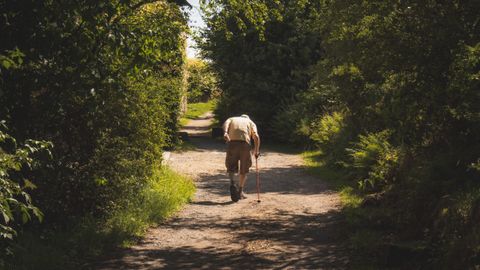
VO2 max is the maximum volume of oxygen your body can take in, transport and use per minute, normalised to bodyweight. It is limited mostly by cardiac output — how much blood the heart can move — and secondarily by what the muscle can do with the oxygen once it arrives.
It is also, across a large body of research, one of the strongest single predictors of all-cause mortality that has been identified. A 2018 cohort study of over 120,000 patients undergoing treadmill testing found the association between fitness and survival to be graded with no upper limit of benefit, and the mortality risk of being in the lowest fitness quintile comparable to or greater than that of smoking, diabetes or coronary artery disease.
That comparison deserves the same caution as the loneliness-versus-smoking claim: these are observational data, and unfitness is both a cause and a consequence of illness. But the effect is large, consistent, and dose-dependent, which is about as good as observational evidence gets.
The decline, and what drives it
VO2 max peaks in the mid-twenties and declines from there at roughly 10 per cent per decade in sedentary adults. The Baltimore Longitudinal Study of Aging showed something important, though: the rate is not constant. It is modest through the thirties and forties, and accelerates markedly after sixty — losses of more than 20 per cent per decade in the seventies and beyond.
Three mechanisms account for most of it. Maximum heart rate falls with age, roughly predictably and largely unresponsively to training. Stroke volume declines. And muscle mass falls, reducing the tissue available to extract oxygen.
Only two of those three are modifiable, which is why training slows the decline rather than stopping it. But slowing it matters enormously, because there is a functional threshold below which independence becomes difficult — commonly cited around 18 ml/kg/min for men and 15 for women, below which ordinary activities like climbing stairs approach maximal effort. A fit 70-year-old may sit twenty years above that threshold. A sedentary one may be approaching it.
The six-minute walk test — how far you can walk on a flat course in six minutes — correlates reasonably with VO2 max in older adults. Under 350 m suggests significant limitation; over 500 m is good for someone in their seventies. Alternatively, the talk test: moderate intensity is the effort at which you can speak in sentences but not sing. It is cruder than a heart rate zone and considerably more reliable in people on beta blockers.
What training does at this age
The encouraging finding is that trainability is largely preserved. Older adults improve VO2 max by broadly similar relative percentages to younger adults in response to the same programme — typically 10 to 20 per cent over twelve to twenty weeks. The absolute gain is smaller because the starting point is lower, but the adaptation itself is not blunted the way muscle protein synthesis is.
What changes is recovery. Older athletes need more time between hard sessions, and the cost of a poorly planned week shows up faster.
How to structure it
The polarised model used by endurance athletes translates well and is more forgiving than it sounds. Roughly 80 per cent of the volume at an easy, conversational intensity, and 20 per cent genuinely hard.
The easy work is where most of the adaptation to the heart and the peripheral circulation happens, and it is where most people go wrong by working too hard. Zone two, in the common shorthand — you can hold a conversation, you would rather not sing. Three to four sessions a week, 30 to 60 minutes. Walking uphill counts. So does cycling, swimming, rowing, or a cross-trainer if joints object to impact.
The hard work is where VO2 max specifically improves, and it does not need to be much. One session a week of intervals — four minutes hard, three minutes easy, repeated four times, is the classic Norwegian protocol and has been tested in older adults including cardiac patients under supervision. Even one session a week of shorter, less structured efforts produces measurable change.
The generational caveat: if you have known cardiac disease, uncontrolled hypertension, or symptoms on exertion, high-intensity work should start under supervision. Cardiac rehabilitation programmes exist precisely for this and are consistently underused.
Where strength fits
Resistance training does not improve VO2 max much directly. It matters here anyway, for two reasons. It preserves the muscle mass that partly determines oxygen extraction, and it improves movement economy — a stronger person uses a smaller fraction of their maximum to walk at a given speed, which effectively raises their functional ceiling without touching the physiological one.
The combination outperforms either alone in trials of older adults, and the total time commitment is around three to four hours a week. That is the price of the single most robust modifiable predictor of how the next twenty years go.
Starting from very unfit
The dose-response curve is steepest at the bottom. The largest mortality risk reduction occurs between the least fit group and the second least fit — moving from nothing to a modest amount buys more than moving from a lot to more.
Which means the honest advice for someone who does nothing is not a programme. It is: walk for ten minutes today, at a pace that makes conversation slightly effortful, and repeat it tomorrow. The rest can be designed later, once the habit exists to design around.
Also by Ray Okafor
- Why muscle, not weight, is the number that matters after 60Strength & Mobility
- The balance test you can do in your kitchen, and what to do if you fail itStrength & Mobility
- Grip strength is the cheapest health test in medicineStrength & Mobility
- Can you get up off the floor without using your hands?Strength & Mobility