Nutrition After 50
Losing weight after 60: when it helps, and when it is the wrong target
The obesity paradox in older adults is real enough to complicate the advice. Weight loss that takes muscle with it is harmful, and most weight loss does exactly that unless it is designed not to.
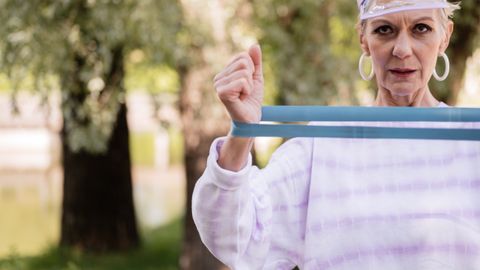
The advice to lose weight is delivered to older adults with the same confidence as to forty-year-olds, and the evidence underneath it is considerably more complicated.
Multiple large cohort studies have found that the body mass index associated with lowest mortality rises with age. In the over-65s, the nadir often sits in the overweight range, around 25 to 30, and being at the lower end of "normal" is associated with higher mortality than being modestly overweight. This is the so-called obesity paradox.
It is heavily confounded. Illness causes weight loss, smokers are thinner and die sooner, and BMI cannot distinguish muscle from fat. Analyses that exclude early deaths and never-smokers attenuate the effect substantially. But they do not abolish it, and the practical conclusion stands: the risk associated with a given BMI is different at 75 than at 45.
The real problem is composition
BMI is a poor instrument at any age and a worse one here. Two 78-year-olds at BMI 28 can be entirely different people — one with preserved muscle and a modest fat excess, the other with substantial fat and depleted muscle. The second has sarcopenic obesity, which carries worse outcomes than either obesity or sarcopenia alone, and which looks unremarkable on a scale.
This is why weight is the wrong outcome to chase. The thing that predicts disability and mortality is not how much you weigh but how much of you is muscle and what that muscle can do.
In unmodified weight loss, roughly 25 per cent of the weight lost is lean tissue. In an older adult who is already losing muscle at 1–2 per cent a year, that is a serious cost — and the muscle does not come back on its own when the diet ends. Weight regain, when it happens, is disproportionately fat. Repeated cycles ratchet body composition in the wrong direction.
When weight loss is clearly worth pursuing
Several situations where the benefit is well supported:
- Symptomatic knee or hip osteoarthritis. Trials show consistent improvement in pain and function, and joint loading is directly mechanical.
- Type 2 diabetes, where weight loss improves glycaemic control and can reduce medication burden.
- Obstructive sleep apnoea, which is strongly weight-related.
- Before elective joint replacement, where higher BMI is associated with complications — though this needs care not to arrive at surgery weaker.
- Significant obesity limiting mobility, where the functional gain is large.
How to do it without losing the muscle
This is the whole of the practical advice, and it is well established in the trial literature — the Look AHEAD and IDEA studies among others.
Resistance training is not optional. It is the single factor that determines whether weight loss preserves lean mass. Two to three sessions a week, progressive load. Without it, a diet in an older adult is largely a muscle-reduction programme with a fat-loss side effect.
Protein goes up, not down. During energy restriction, requirements rise. Aim for the upper end — 1.2 to 1.5 g per kilogram of bodyweight daily, distributed across meals at 25 to 30 g each. This is the opposite of what most reduced-calorie meal plans deliver.
The deficit stays modest. A 500 kcal daily deficit producing roughly half a kilogram a week is appropriate for a younger adult. In older adults, 250 to 500 kcal and a slower rate is more protective of lean mass, and aggressive very-low-calorie approaches are rarely appropriate.
Micronutrients need watching. A smaller volume of food makes it harder to obtain adequate calcium, vitamin D, B12, iron and folate — all of which are already marginal in many older diets.
When weight loss is a symptom rather than a goal
The situation that gets missed. Unintentional weight loss in an older adult is a red flag, not an achievement, and it is regularly congratulated by well-meaning family and clinicians who have not asked whether it was intended.
Losing more than 5 per cent of bodyweight over six months without trying warrants investigation. The differential includes malignancy, hyperthyroidism, depression, dementia, poorly controlled diabetes, malabsorption, chronic infection, heart failure, dental problems, swallowing difficulty, medication effects, and simple social causes — bereavement, isolation, poverty, difficulty shopping.
That list is why the question "was this deliberate?" is one of the more important ones in a consultation.
The measurements worth taking instead
Waist circumference tracks visceral fat better than BMI and is worth more than the scale. Grip strength and the five-times sit-to-stand track the muscle side. Together they tell you whether a change is going in a good direction.
A person who has lost four kilograms with unchanged grip strength and an improved sit-to-stand time has lost fat and kept muscle. A person who has lost four kilograms with a slower sit-to-stand has lost something they needed. The scale reports both identically, which is a fair summary of why it is the wrong instrument for this job.
Also by Ingrid Solberg
- How much protein do you actually need after 50?Nutrition After 50
- Vitamin D, B12 and calcium: which supplements have earned their place after 60Nutrition After 50
- Fibre, the ageing gut, and why constipation is not inevitableNutrition After 50
- Cooking for one after a lifetime of cooking for fourLiving Well