Preventive Care
Foot care after 70 is not a cosmetic matter
Painful feet change how you walk, which changes your balance, which changes your falls risk. Reduced flexibility and eyesight mean many people over 70 cannot properly inspect their own feet.
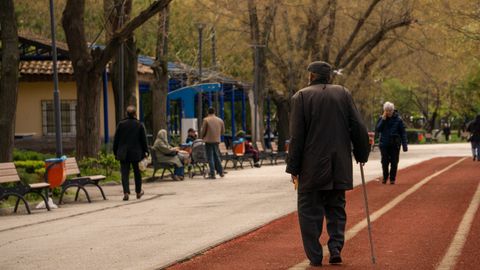
Foot problems affect a large majority of adults over sixty-five, and they are consistently associated with reduced mobility, impaired balance and increased falls risk. They are also among the most under-treated problems in this age group, largely because they are regarded as trivial.
The mechanism by which they matter is straightforward. A painful foot changes gait — shorter steps, altered weight distribution, reduced push-off. Altered gait reduces stability. Reduced stability increases falls. And the feet are also where a great deal of sensory information about the ground comes from.
What changes with age
The fat pad under the heel and forefoot thins, reducing cushioning. Skin becomes drier and more prone to fissuring, particularly around the heel. Nails thicken and become harder to cut. Circulation declines. Sensation reduces, particularly with diabetes. Toe deformities — hallux valgus, hammer toes, claw toes — accumulate over decades of footwear.
Arch structure changes too. The tibialis posterior tendon can become insufficient, allowing the arch to flatten and the foot to roll inward, which alters mechanics all the way up to the hip.
The specific problems
Onychomycosis — fungal nail infection. Common, and more than cosmetic: thickened nails press against footwear and cause ulceration, particularly in diabetes.
Corns and callus. These are the skin's response to abnormal pressure, and the pressure is the actual problem. Removing callus without addressing footwear or foot mechanics guarantees recurrence. Callus over a bony prominence can conceal an ulcer beneath it.
Ingrown toenails, often the result of nails being cut down at the corners rather than straight across.
Plantar heel pain. Very common, and usually improved by calf stretching, load management and appropriate footwear rather than by injections.
Peripheral neuropathy. Numbness, tingling, burning, or a sensation of walking on cotton wool. Reduces protective sensation and impairs balance markedly. Causes include diabetes, B12 deficiency, alcohol, chemotherapy, hypothyroidism and — in a substantial proportion — no identifiable cause.
Inspect the whole foot daily if you have diabetes, and at least weekly otherwise — soles, heels, between the toes. If you cannot reach or see properly, use a mirror on the floor or ask someone. Also look inside your shoes with a hand: a small stone, a rucked insole or a protruding nail causes damage silently in a foot with reduced sensation.
Diabetes changes everything
Diabetic foot disease is a leading cause of non-traumatic lower limb amputation, and the sequence is well understood: neuropathy removes the pain that would prompt protection, poor circulation impairs healing, and a minor injury becomes an ulcer, then an infection.
Everyone with diabetes should have an annual foot check assessing sensation with a 10 g monofilament, pulses, skin condition and deformity, with risk stratification determining follow-up.
Any new ulcer, area of redness, warmth, swelling or discharge in a diabetic foot needs assessment within days — not weeks. Delay is what determines outcomes.
Never use over-the-counter corn plasters if you have diabetes or poor circulation. They contain salicylic acid and can burn through skin that has no sensation to report it.
Footwear, which is where most of it is decided
The evidence for footwear in falls prevention supports fairly specific characteristics.
- A firm, thin, textured sole. Thin soles improve proprioception; very cushioned soles feel safer and reduce ground feedback.
- A low, broad heel. Heel height above about 2.5 cm increases instability.
- A fastening — laces, velcro or a strap. Slip-ons and backless slippers require the toes to grip to stay on, which alters gait.
- Adequate toe box depth, particularly with deformity.
- Correct fit. Feet lengthen and widen with age, and many people have been buying the same size since 1985. Get measured, in the afternoon when feet are largest.
Indoor footwear matters as much as outdoor. A significant proportion of falls occur at home, and walking in socks on hard floors or in worn backless slippers is a recognised contributor.
When to see a podiatrist
If you cannot comfortably reach your feet to cut your own nails, that is reason enough — and it is a common and unembarrassing one. Also: any diabetes, any numbness, thickened or painful nails, recurrent callus or corns, any wound that has not healed within two weeks, or foot pain that is changing how you walk.
In many health systems podiatry is available on referral for those at risk, and privately otherwise. It is one of the better-value contacts available to an older adult, and it is chronically under-used relative to the amount of mobility and independence that depends on it.
Also by Ray Okafor
- Why muscle, not weight, is the number that matters after 60Strength & Mobility
- The balance test you can do in your kitchen, and what to do if you fail itStrength & Mobility
- Grip strength is the cheapest health test in medicineStrength & Mobility
- Can you get up off the floor without using your hands?Strength & Mobility