Strength & Mobility
Carrying Things Is A Trainable Capacity
Loaded carrying combines grip, trunk stability and balance under load, and losing it restricts independent living in ways that a grip test alone does not predict.
Grip strength is measured routinely because it predicts so much. Carrying something across a room is a related but broader capacity, and it fails independently.
Carrying is a whole-body task
Holding a weight at the side loads the hand, but also the shoulder, the trunk muscles resisting sideways bending, and the legs balancing an off-center mass.
The load shifts continuously as the body moves, so the stabilizing demand changes with every step. Static holding and walking with a load are different requirements.
This is why someone can register adequate grip on a device and still be unable to carry a full grocery bag from the car to the kitchen.
What losing it removes
Groceries, laundry baskets, watering cans and suitcases all depend on it. When carrying becomes unsafe, a large set of ordinary tasks becomes dependent on other people.
The adaptations are quiet: smaller loads, more trips, sliding rather than lifting. Each is reasonable individually and together they mask a real decline.
Falls while carrying are also common, because the hands are unavailable to catch the body and the load alters the center of mass.
Why the trunk is usually the limiting factor
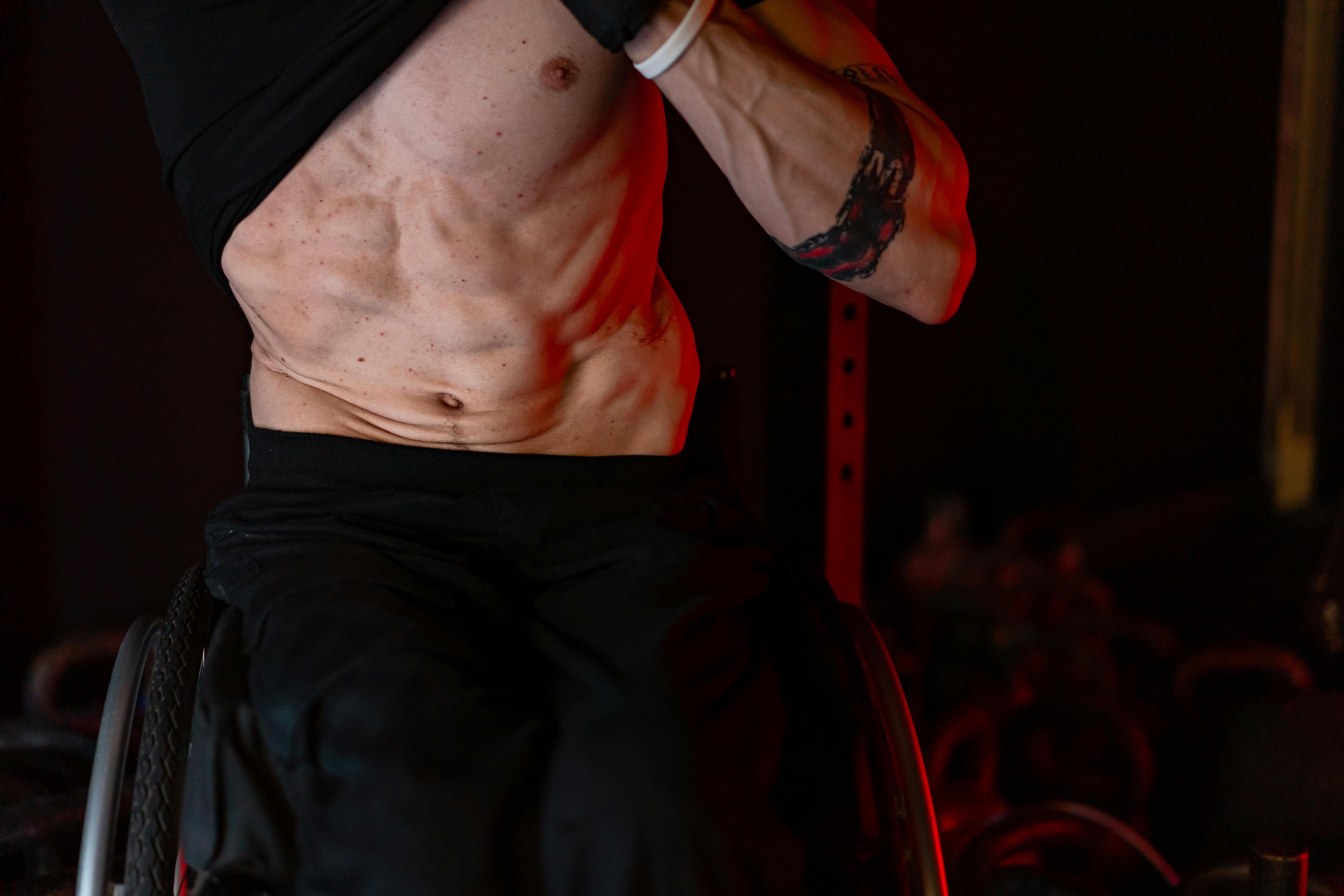
Holding a weight on one side creates a bending force the trunk must resist. That resistance is what keeps the spine upright and the shoulders level.
Trunk muscles are trained poorly by walking and not at all by seated exercise, so they often lag behind the arms and legs in otherwise active people.
The result is a person whose limbs are adequate but whose middle gives way under asymmetric load. The failure shows as leaning rather than as dropping the weight.
Grip is the other constraint
Sustained gripping fatigues faster than it weakens, so the relevant capacity is holding on for a duration rather than squeezing hard once.
Handle design changes this considerably. Thin plastic bag handles concentrate pressure and fail early, while a wider handle allows a far longer carry at the same load.
Choosing bags and containers with substantial handles is a practical adjustment that preserves the capacity rather than working around it.
Training it directly
Walking a set distance while holding a weight in one hand, then the other, trains grip, trunk and balance simultaneously in the pattern that daily life uses.
Progression comes from distance before weight, since duration is what daily tasks demand. A short heavy carry does not prepare anyone for a long light one.
Anyone who has begun dropping objects, or noticed sudden difficulty holding on, should have it evaluated. Sudden change points to something other than gradual conditioning.
Also by Ray Okafor
- Why muscle, not weight, is the number that matters after 60Strength & Mobility
- The balance test you can do in your kitchen, and what to do if you fail itStrength & Mobility
- Grip strength is the cheapest health test in medicineStrength & Mobility
- Can you get up off the floor without using your hands?Strength & Mobility