Strength & Mobility
Stretching does less than you were told, and mobility work does more
Static stretching does not prevent injury, does not reduce soreness much, and does not lengthen tissue in any lasting way. What does improve range of motion is loading through it.
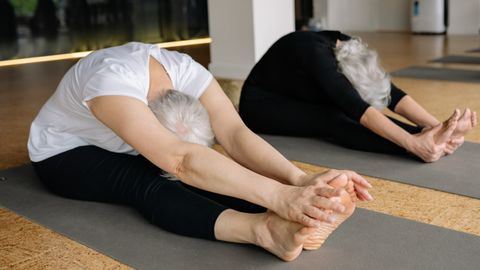
Few pieces of exercise advice have been repeated more confidently or supported less well than the instruction to stretch before exercise to prevent injury. Systematic reviews have looked at this repeatedly and found no meaningful protective effect. Static stretching before activity also produces a small, temporary reduction in force and power output — which matters little for a walk and matters for anything requiring strength.
The claim that stretching reduces delayed-onset muscle soreness has fared similarly. A Cochrane review found the effect to be too small to be of practical use.
None of which means flexibility does not matter. It means the intervention was wrong.
What actually limits range of motion
Three things, in roughly descending order of importance for most people.
Neural tolerance. Much of what feels like tightness is protective — the nervous system limiting range at a point it does not consider safe, because you have no strength or control there. Stretch tolerance research has shown that the acute gains from stretching are largely changes in how much sensation you will accept, not changes in tissue length.
Structural tissue length, which does adapt, but slowly and in response to sustained loaded positions rather than to thirty-second holds.
Joint architecture. Bone shape sets a hard ceiling. Hip socket depth and femoral neck angle vary considerably between individuals, and no amount of work changes them. Some people will never sit in a deep squat, and it is not a discipline failure.
What works better
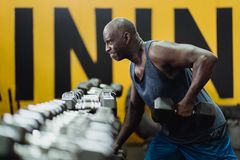
Loaded stretching and full-range strength work. Training a muscle through its full available range under load produces increases in range of motion comparable to, and in several trials greater than, static stretching — while simultaneously building strength in that range. Deep squats, Romanian deadlifts, full-range shoulder work, calf raises off a step.
This is the important idea: range you cannot control is not range you have. A hip that passively goes to 120 degrees but can only actively produce force to 80 will function as an 80-degree hip.
Eccentric training, where the muscle lengthens under load, is particularly effective at increasing fascicle length and range, and has good evidence in tendinopathy management.
End-range isometrics. Holding a contraction at the limit of your range teaches the nervous system that the position is safe and under control, which addresses the neural component directly. This is essentially what the more effective PNF stretching protocols were doing.
Dynamic movement before activity. Warming up with progressively larger movements of the joints you are about to use raises tissue temperature and prepares the nervous system without the force decrement of static stretching. Leg swings, arm circles, gradually deeper lunges, some easy walking.
Before activity: dynamic movement, five to ten minutes, progressively larger. Not static holds.
To increase range: strength work through the fullest range you can control, plus end-range holds. Static stretching afterwards is fine, pleasant, and a minor contributor.
For general wellbeing: stretch because it feels good, which is a perfectly sufficient reason and does not need to be dressed up as injury prevention.
The ranges that matter most after sixty
Not all flexibility is equally useful. Four restrictions cause most of the functional trouble.
Ankle dorsiflexion. Limits squatting, stair descent, and the ability to recover from a forward stumble. Test it by kneeling with one foot flat and driving the knee forward over the toes — about 10 cm of clearance from wall to toe is a reasonable target. Train it with loaded calf raises through full range and slow lunges into dorsiflexion.
Hip extension. Chronically shortened by sitting, and its loss shortens stride length, which is one of the mechanical reasons gait speed falls. Train with split-stance work and hip thrusts rather than passive lunging.
Thoracic rotation and extension. Declines markedly with age and with kyphosis, and its loss forces compensation at the neck and lumbar spine. It also determines whether you can turn to check a blind spot while driving.
Shoulder overhead range. Determines whether you can reach a top shelf, and its loss is one of the quiet contributors to falls, as people climb on things instead.
Where stretching has a real role
Two situations. Where a genuine contracture has developed — after prolonged immobilisation, after a stroke, in advanced Parkinson's — prolonged, sustained positioning is legitimate treatment and is what physiotherapists prescribe.
And in conditions like ankylosing spondylitis, where maintaining range is a central part of management.
For everybody else, the honest summary is that stretching is a pleasant, low-risk activity with modest effects, that it will not prevent your injuries, and that if what you want is usable range, you will get there faster by loading the positions than by holding them.
Also by Ray Okafor
- Why muscle, not weight, is the number that matters after 60Strength & Mobility
- The balance test you can do in your kitchen, and what to do if you fail itStrength & Mobility
- Grip strength is the cheapest health test in medicineStrength & Mobility
- Can you get up off the floor without using your hands?Strength & Mobility